Photo by Sixteen Miles Out on Unsplash I haven’t blogged in a while. For two years, I put this blog on private as I’d no longer had the willpower to push out blog posts the way that I did six years ago. I write a little more about this in my blog post Why Do You Do… ? Recently, I have revamped my blog. I have unpublished posts that didn’t reflect who I was then or who I am now, or those that felt too personal to share ‘out there’. I also removed posts I wrote just for the sake of posting content and main taining an audience, even when inauthentic to me. It means more to me that others feel the value and quality of what I share rather than the quantity. I am not sure how often I will post, all I know is when the inspiration and curiosity strike, that’s when it will occur. My intention for this blog is to lead with more spontaneity than usual, structured content, along with transparency, authenticity, and vulnerability to whatever degree feels right. My inte...
This is the first edition of "What's NEW in my Bookshelf?"
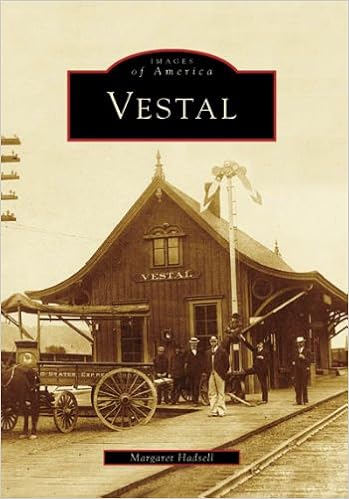
Here are my personal thoughts on the book.
Table of Contents
Acknowledgments
Introduction
1. Prehistoric Vestal
2. Vestal
3. Ross Corners
4. Tracy Creek
5. Twin Orchards
6. Vestal Center
7. Willow Point
8. Mile Wide
Summary
The book mainly shows photos of prominent settlers and locations around the town of Vestal. It briefly mentions pre-Vestal and the families, churches, schools, businesses, etc., within parts of Vestal.
Evaluation
I liked how the author inserted plat maps into the book. At the beginning of each chapter, there is a section of the entire map in which part of it will be "zoomed in" on specific areas of Vestal.
I was a bit disappointed with this book because I expected more context, though I did love the photographs.
Vestal was predominantly rural and the main occupation was a farmer. Over time as Vestal grew, industrial-wise, there become more jobs besides family businesses. I would have liked to see the transformation (through photos) from rural to industrial.
This change would have affected my ancestors and the choices they made before moving to other cities in New York and Pennsylvania.
Recommendation
I would recommend this book to anybody interested in knowing about the settlers during the 1820s into the 1940s.
For family historians and genealogists, this wouldn't give you a lot of context, but insight into who your ancestors may have interacted with if you have Broome Co. ancestors.
My star rating is 3.5 out of 5.
Comments
Post a Comment